Thursday, February 19, 2015

The Gospel of Nicodemus: How influential is its account of Christ's descent into Hell?

If you have any experience with the synoptic gospels found in the New Testament, reading the Gospel of Nicodemus will surprise you on more than one occasion. The first thing you’ll notice about this book, in relation to the synoptic gospels, is the dramatic shift in the starting point. Instead of being introduced by the story of his birth, Jesus is introduced right as he is being tried by Pilate, a Roman governor. This particular gospel focuses much less on the ministry of Jesus than the outburst of reactions it incites. In fact, the ministry of Jesus as we know it from the New Testament gospels is only seen in short accounts made by his few supporters in the court of Pilate. The supporters only touch on the miracles performed by Jesus (in most cases the miracle had been performed on the speaker himself). Each of the accounts given covers a miracle story present in the New Testament gospels; the gospel itself seems to rely on the reader’s familiarity with at least one of the synoptic gospels. 

As the story progresses, the author’s focus continually remains on the outcome of Jesus’ ministry. After the death, burial, and resurrection of Christ, the Gospel of Nicodemus gives an extremely detailed account of his descent into Hell to retrieve the Saints who are trapped there. While covering the events that take place in hell, the author takes the opportunity to connect with and Jewish readers or listeners who might encounter his story. Many of the prophets preparing to ascend to Heaven with Jesus echo the prophecies they are credited with in the Old Testament.

The Gospel of Nicodemus ends with the arrival of the saints in Heaven. This particular gospel takes the story of Christ and his redemption of God’s people much farther than the gospels present in the New Testament. It basically picks the story up when the others left off. In the small segment where this particular book overlaps with the synoptic gospel, it is clear that much more detailed narrative is employed by the author. Names appear more frequently and seem to be more important in general. The exact amount of (supposed) years between the creation of Earth and resurrection of Jesus is even given. The writing resembles a heroic story much more than a biography, but the goal of the story still seems to be the same. The overarching theme remaining: Jesus is the  sovereign Son of God, and he is on Earth to redeem his people. And, on a personal side note, it makes for a much more interesting read.

Probably the most notable reason for the Gospel of Nicodemus to be excluded from the canonized works of the bible is its supposed date of “birth”. The earliest date it can be traced back to is around the middle of the 4th century. While this is very old in my eyes, it does not quite date back as far as many of the other New Testament works. Personally, I feel like the section describing the harrowing of hell by Jesus presents a problem  for many Christians. It is not mentioned in anywhere near as much detail in the New Testament as it is in this particular gospel account. I believe it could possibly be a reason for this gospel to be excluded from the canon. The gospel is purported in its text to be a report from Pontius Pilate himself; however, there is no evidence to support this claim. It is much more likely that someone wrote this account in such a way as to resemble an official document in order to bolster its reputation and validity. 
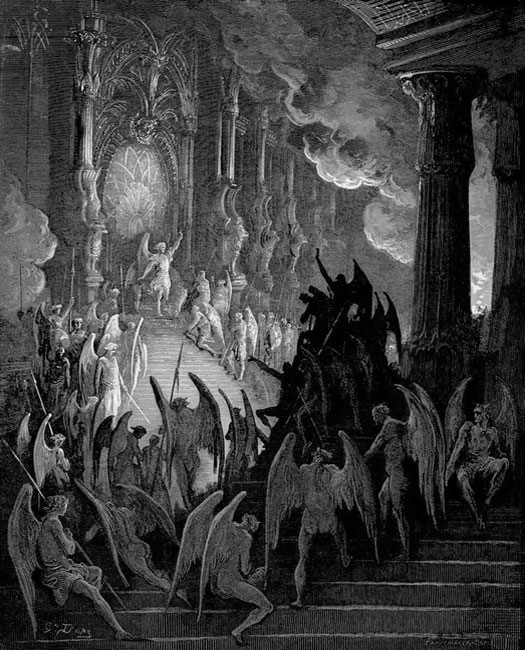
The gospel as a whole is extremely epic in nature, lacking only in length. Reading through this book, I could not help but compare it to Paradise Lost by John Milton. It certainly has an epic feel to it, especially in the section detailing the harrowing of Hell by a pre-resurrected Jesus. The court story and the crucifixion account seem very official in nature, but the rest of the work lends itself to an epic story. This style balances out the work as whole. It almost, in a sense, provides facts that are bolstered by heroic tales. 

Reading through the Gospel of Nicodemus was very interesting. It is by far my favorite gospel account as of yet. Perhaps this is due to my unfamiliarity with the work, but I can’t help but think it would be my favorite even if it was canonized. My primary enjoyment came from the section of the gospel devoted to Jesus’ harrowing of hell, or his triumphant descent into Hell to bring salvation to all  the righteous who have died to date, as Wikipedia puts it. This portion of the gospel raises more questions than I can't even begin to tell you about. However, I suppose it all boils down to one: How influential is the Gospel of Nicodemus’ account of the harrowing of Hell? 
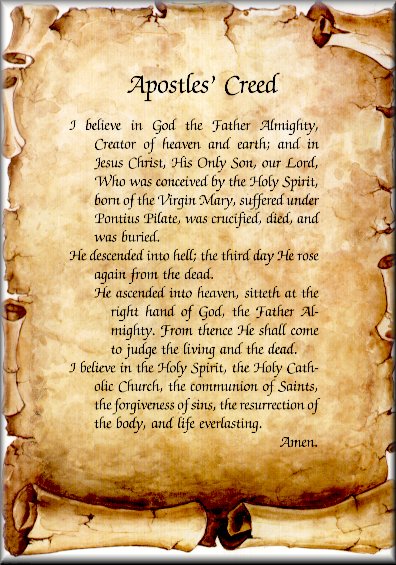
None of the synoptic gospels mention Christ’s descent into the bowels of the Earth. In fact, his descent is only briefly mentioned a few times throughout scripture as whole. However, the idea that Christ descended into Hell, or at least purgatory or “limbo”, is a rather fundamental idea in Christianity. Even the Apostles’ Creed, an early statement of faith in the Christian church, mentions Christ descending into Hell. While the New Testament does not go into very much detail concerning this descent, the Apostles’ Creed, including the acknowledgement of Christ going to Hell, is still used by many denominations of the Christian faith today. While the Gospel of Nicodemus is not present in any of the bibles found today, the idea of Christ’s descent into Hell is very prominent. 

The account of the descent found in the Gospel of Nicodemus is extremely detailed in nature. I wondered if it could have been the original account of Christ’s descent into Hell, upon which New Testament writers based their statements. However, the reverse appears to hold more water, so to speak. The oldest manuscripts depicting the Gospel of Nicodemus do not contain the section covering the harrowing of Hell. Instead, it seems to have been added at a considerably later date. This leads me to believe it is someone’s personal imagination of the way Christ’s descent into the underworld could have gone. 

The first half of the Gospel of Nicodemus is extremely dated and, for the most part, very orthodox. Nearly nothing can be found in the accounts of the trial and passion of Jesus Christ that can be considered as opposing to accounts found in the New Testament. Since the harrowing of Hell was not added until much later, it seems to be more of a commentary compounding on the ideas found in the New Testament. There is no doubt the author of this addition to the Gospel of Nicodemus would have been familiar with the works of the New Testament, too many similarities appear throughout the work to assume otherwise. 


So, in retrospect, it seems that the account of Jesus’ descent into Hell that appears in the Gospel of Nicodemus is not exactly foundational, as I first expected. Instead, the exact opposite appears to be true of the story. While I still believe this work contains much to contribute to the big picture, it seems that New Testament writers only sparked a creative seed for the author. 

Sunday, February 8, 2015

Who is "the Prophet" mention in John 1:19-23?

The questioning of a person’s identity is a common theme throughout the gospels of the New Testament. Therefore, it comes as no surprise to see a group of people questioning John the Baptist about his true identity in the opening chapter of the Gospel of John (John 1:19-23). Apparently, the Jews have suspicions about who John the Baptist is, and they send priests to interrogate him on their behalf. The priests assume John will claim to be the Messiah, “the Prophet”, or Elijah; however, John denies each one of these identities with simple, negative responses. The responses of John the Baptist are not exactly what caught my eye; instead, the questions asked by the priests raised a question of my own. The priests ask John if he is Christ, Elijah, or “the Prophet”. Knowing who Christ and Elijah are, my curiosity was raised by the identity of “the Prophet” mentioned by the priests. 

Many Christians believe the prophet mentioned in this conversation is in reference to the Messiah whose coming Moses foretells in Deuteronomy 18:15. If this is true, Christ and “the Prophet” would be one and the same. After all, Jesus solidifies the idea that he is the prophet Moses is talking about (John 5:46). If this idea is true, John is basically answering the same question twice. The word “Christ” serves more than one purpose in the New Testament. Obviously it can be used in regards to the name of Jesus Christ, the character, but it can also be used as a synonym for “messiah”. Christos, the Greek derivative of the word “Christ” is equated to mashiach, the Hebrew derivative of the word “messiah”. Therefore, the first thing John tells the priests is that he is not the Messiah, so to me, it would not make sense for the priests to ask him again if he is the savior that has been predicted. 

Another theory suggests that “the Prophet” mentioned in this inquiry could be the prophet Jeremiah. It could be that the Jews of that time thought Jeremiah would appear before the Messiah ever came. This is ironic, because the story reveals that John the Baptist is actually the prophet who is preceding the Messiah. However, this theory also seems a bit flawed to me.  Most Jews believe, according to Old Testament prophecy, that Elijah would be the prophet to precede the coming of the Messiah. As such, the priests ask John if he is Elijah, and he tells them he is not. So, it is unlikely they are still questioning if he is the prophet who is to precede the coming of the Messiah. However, this raises even more questions than I started with. If “the Prophet” in question is not the Messiah or Elijah (or even Jeremiah), then who is he?

The only other theory that seems to hold much weight is the theory presented by the Islamic faith. According to Wikipedia, Muhammad is considered in Islam to be a messenger and prophet sent by God to guide humanity to the right way. When looking to the Bible to find evidence of this prophet, many Muslims find the evidence in this passage of John. Some Muslims insist that Muhammad is “the Prophet” while Jesus is the Christ who is mentioned in this line of questioning. However, not all Muslims hold to this belief about this passage. Many believe the three people mentioned by the priests have nothing to do with the prophet Muhammad. 


It is very possible that there is no differentiation between “Christ” and “the Prophet” or between “Elijah” and “the Prophet”. For instance, the priests could have been desperately trying to categorize John the Baptist, just as the tried to categorize Jesus throughout the Gospels, and were frantically reaching for questions through which they could arrive at an answer they liked. They could have been emphasizing the same question with different words in order to persuade John to answer in a different fashion. The endless possibilities only serve to bolster the Bible’s appeal as a book that can be read over and over while eliciting a different response each time. 

Thursday, January 29, 2015

Who was Theophilus?

The Gospel of Luke and the Book of Acts are two of the most popular books in the most popular collection of works of all time. It should come as no surprise they share a few characteristics. Scholars believe both books were written by the man whom they refer to as Luke the Evangelist. More interestingly, in my opinion, is the commonality they share in their purpose. Both books are addressed to a mystery man named Theophilus. This guy has two of the most widely read books of the Bible addressed to him, but who is he?

Since names are so symbolic throughout the entirety of the Bible, it could be beneficial to start with the meaning of Theophilus as a name. The name “Theophilus” literally means “loved by God,” but carries the idea of “friend of God.” Because of this meaning carried by the name, many scholars believe it is just a stand-in for the average believer and could easily placed by any name one may choose. If we are to accept this belief, then our work here is done, and we can go on our way. However, I find it too easy to just assume the name has symbolic meaning when there very well could have been a man named Theophilus who had about 1/4 of the New Testament addressed directly to him. 

Luke starts his books in a literary style widely used by Greeks at the time. The author states his intentions, why he has those intentions, and to whom the intentions are directed. Many people believe the reader can skip over this introduction and the story will still have the same effect. However, if the “most excellent Theophilus” mentioned in Luke 1:3 is a real person, it is probably a good idea to learn as much about him as we can. 

According to Luke, he writes his gospel so Theophilus “may have certainty concerning the things [he] has been taught.” This leads some scholars to believe two things about Theophilus the man. First, scholars believe Theophilus may have been a relatively high-ranking Roman official who was sympathetic of the Christians and their movement. Perhaps Luke wanted to persuade him to believe the gospel and all of its implications. The term “most excellent” was used in that time when addressing someone of a higher social strata and position. Interestingly enough, the same title was used only 3 other times in the New Testament, all in the book of Acts (Acts 23:26, Acts 24:3, Acts 26:25).  In each of these cases, the title is used in respect a Roman governor. To me, it makes sense that Luke would see the need to “convert” someone in a position of power. It would greatly assist the Christian evangelists in their endeavor if they had a man of power helping to spur the cause. Secondly, it is clear Theophilus was not completely new to the beliefs of the Christian faith. Looking closely at Luke 1:4 we can see that Theophilus has previously been taught either by Luke or someone else. Apparently Luke's intent was to provide Theophilus with factual evidence of the Christ he had been taught about. This idea plays especially well into themes found in the Gospel of Luke; the author constantly uses logical examples and mentions eye-witnesses in his work. 


Regardless of the identity (or existence) of a man named Theophilus, we know Luke was aware his books would be read by more than one man. Therefore, copies would need to be made. Another theory on the role of Theophilus in this story suggests he was the man responsible for allowing the book to be published and copied. In doing so, he would have been doing Luke a great favor for which Luke would undoubtedly be appreciative. However, we can only speculate on the identity of the man named Theophilus. Perhaps light will soon be shed on the matter, and perhaps we’ll never know. 

Monday, January 26, 2015

How does Jesus relate the other Rabbis of his time?

The primary role of Jesus throughout the New Testament is that of the Messiah. Prophets speak about the coming of a Messiah throughout the Old Testament, and the gospel writers (in this case, Mark) set out to convince the people Jesus is the one they have been waiting for. Jesus is obviously depicted as special in scripture. He is set apart as a divine being, the son of Yahweh. However, Jesus is given another title throughout the gospel of Mark, both by his followers and passers-by. There are several cases in this book when Jesus is addressed as “Rabbi”. This provoked my interest. Knowing there were hundreds of rabbis in Jesus’ time, I am curious to know how he related to them, and how is relationship with his students (disciples) compared to theirs. 


This presents a problem. Many modern Christians view Jesus’ knowledge as God-given and divine. In fact, Galilee, where Jesus is from, is often given a bad reputation. People consider Galilee to be the home of lower-class, unlearned peasants, not the home of respectable Rabbis. However, upon further investigation, this proves to be fundamentally false. “The level of learning and education in Galilee exceeded that of Judea in Jesus’ day. Galilee surpassed even Judea in its schools of learning, and most of the famous rabbis of Jesus’ day were from Galilee (Johnanan ben Zakkai, Hanina ben Doda, Abba Yose Holikufri, Zadok, Halaphta, Hananian ben Teradyon.)” So, it is very plausible that Jesus is well-educated and an imminent master of Jewish teachings. 

The theory of Jesus being a learned master of the Jewish scriptures is further bolstered by the beginning of his ministry. Jesus began traveling, with his students in tow, to teach in villages across Galilee and beyond its borders. Jesus would not have been the first teacher to do this. In fact, traveling was the norm for Rabbis at the time. Jesus is called Rabbi, travels like a Rabbi, and has students like a Rabbi. All signs are pointing towards Jesus as a learned master of the scriptures. 


A very large difference appears at this point. Jesus’ students most likely did not graduate from Beth Midrash and obtain permission to become his disciples. This is evident from the fact they were already working as tradesmen. However, Jesus hand picked students from the community who had only completed their primary education. As a result of this revolutionary call to discipleship, they fulfilled their duties as students of Jesus. They learned from his teachings and sought to become like him. In the end, they became teachers themselves began educating their own students. 

While Jesus was similar in many ways to Rabbis of the time, he was exceptional. He added much more than his own interpretation to the scriptures he had learned, and he took on students who did not have the proper credentials. These things undoubtedly flustered the other teachers of the time, and they often challenged his authority and authenticity. 


**************Seriously, watch the video. 

****************************Please. 

Tuesday, January 20, 2015

Why are trees used as symbols in the book of Matthew?

See? Not exactly barren.
I’m going to level with you here. My grasp on geography probably isn’t as strong as it should be. It’s hard for me to imagine the landscape or weather of a place unless I’ve been there. I’m directionally challenged and have no concept of separating one place from the other. To top it all off, geography is my worst subject on Trivia Crack. It’s sad, truly. However, my subpar understanding of geography is directly responsible for my blog question for this week. When I think Palestine, I think desert. No amount of pictures of lush, beautiful, sprawling gardens could possibly change my perception. For me to think of Palestine any differently, I would need to go there, and seeing as how that trip isn’t on my immediate travel itinerary, I am stuck with my perception of Palestine as a barren desert. That being said, the countless references to trees and fruit in the book of Matthew definitely jumped off the page. So, what exactly is the purpose for the use of trees and fruit as symbols in Matthew (or the rest of the Bible for that matter)?

Trees appear in Matthew many times. Matthew 7:17, 12:33, 21:18-22, and 3:10 are just a few instances of their appearance. What makes them so useful as tools for Matthew to reach his target audience? 

From recreation to resources, trees have played a significant role throughout history. The presence of trees has always been instrumental when determining the location of civilization. Depictions of trees appear in tombs and on monuments remaining from ancient Egypt. The markings on monuments definitely denote the importance of trees and their fruit as they pertain to livelihood, and the presence of drawings of trees in the burial places of pharaohs of ancient Egypt also ties spiritual importance to them. 

Trees find root in religious practices dating back to ancient Greece and Egypt. The ancient Greeks regarded trees as the first temples of the gods and sacred groves as their first places of worship, where the powerful forces of nature inspired human image making.  Characters in the old testament also used trees as markers for holy ground and places of worship. Coincidentally, the Christian creation story highlights a tree in the construction of the very foundations of life. Adam and Eve eating the fruit of a tree effectively set life as we know it on its course.  Therefore, the significance of trees in religion cannot be overstated.


In the time and region Matthew’s book covers, trees are not only prevalent, but they are essential to the people who live there. Fig trees are extremely  important for the sustenance provided by their fruit, and the olive tree is a staple in commerce. The characters who appear in the book of Matthew are not only familiar with the trees mentioned by Jesus in Matthew’s gospel, but they actively depend on them. Therefore, it is easy for them to relate trees to other aspects of life. Since Matthew is writing specifically to Jews, it is important that they be able to connect everything Jesus says to the scriptures and prophecies of the old testament. Trees are mentioned many times in prophecies concerning Yahweh’s temple and the covenant with his people. Therefore, Jesus’ use of trees as symbols help to fulfill prophecies that were given in the past. 

The fig tree in particular is used often as a source of food for the characters in the book of Matthew. The fruit is filling, sustainable, reliable, and predictable. Fig trees routinely begin growing fruit at the same time they begin growing leaves. Therefore, when a fig tree shows leaves, fruit should always be present. This fact plays a significant role in a particular story in the book of Matthew. In Matthew 21:18-22, Jesus curses a fig tree when he finds no fruit on its branches. Previously when reading this story, I always found it very fickle of Jesus to curse a tree for not having fruit when he wanted it. However, thanks to the research I’ve done, I now understand his frustration. The fig tree in the story is full of leaves when Jesus approaches it. Because figs look so similar to the leaves (as seen in the picture), he can't tell if their is any fruit at this point, but according to the growth of said tree, it should bear fruit along with those leaves. However, there are no figs to be found. The tree looks normal. There are branches and leaves, but there is no fruit. So, Jesus curses the tree that it may never grow fruit again. He connects this to people. A person may exhibit physical (branches) and intellectual (leaves) growth, but if the person is not exhibiting spiritual (fruit) growth, they are not doing what they are meant to be doing. The Jews to whom Matthew is writing can relate to this symbol because they rely so heavily on the predictability of the fig tree. 


The symbolism of trees and fruit found in Matthew works for all these reasons and more. To put it bluntly, people understand trees and recognize their importance. Honestly, trees carry an oddly spiritual connotation with people. Therefore, it simply makes sense for them to be used as symbols, made the subject of metaphors, and appear in parables. 

Sunday, November 9, 2014

Is Purim still celebrated in Jewish culture, and, if so, what are the cultural implications of it?

The book of Esther details the heroic actions of Mordecai and Esther. By working together, these two characters are able to save the entire Jewish nation from basic genocide at the hands of Haman the Agagite. The plot against the Jews is ultimately foiled in an uprising that left over 75,000 of their enemies dead. The days on which the uprising took place became collectively known as Purim, after Pur (the name the “lots” used by the king to determine the day of the massacre). Esther 9:26-28 details the birth of the holiday: “ Therefore they called these days Purim, after the term Pur. There fore, because of all that was written in this letter, and of what they had faced in this matter, and of what had happened to them, the Jews firmly obligated themselves and their offspring and all who joined them, that without fail they would keep these two days according to what was written and at the time appointed every year, that these days should be remembered and kept throughout every generation, in every clan, province, and city, and that these days of Purim should never fall into disuse among the Jews. nor should the commemoration of these days cease among their descendants.” It is this passage that spurred the question for my blog. Is Purim still celebrated in Jewish culture, and, if so, what are the cultural implications of it?

The passage in Esther that introduces Purim as a holiday takes an adamant stance that the celebratory tradition should be passed down forever. Indeed, the tradition of celebrating Purim is still alive and well in Jewish culture. The holiday is considered to be one of the most festive holidays in the Jewish faith. Partakers in the celebration are expected to party hard. The revelry associated with Purim has caused other cultures to dub the holiday as the Jewish Mardi Gras. The good times to be had on Purim are reminiscent of the celebrations that erupted when the Jews overcame their enemies under the guidance of Mordecai and Esther. Revelers today now enjoy drinking, eating and dressing up in all sorts of costumes to celebrate the holiday. 

Noisemaker used to blot out the name of
Haman during the reading of the Megillah,
and traditional Purim cookies.


Perhaps the most interesting aspects of Purim are not illustrated by the way it is celebrated. Instead, it is the historical parallels to the events that took place on the original days of Purim that are so intriguing. “The Pesach (Passover) seder reminds us that in every generation, there are those who rise up to destroy us, but G-d saves us from their hand. In the time of the Book of Esther, Haman was the one who tried to destroy us.” There have been multiple instances in modern times of a nemesis rising up agains the Jewish people and being defeated that hold special connections to Purim. The first person that comes to mind is obviously Adolf Hitler and the Nazi Party. The party was obviously defeated, but not before it claimed the lives of millions of Jews. In 1946, during the Nuremberg war crime trials, 10 of Hitler’s top associates were hanged in punishment for their war crimes. This bears an obvious correlation with Haman’s 10 sons who were hanged at the hands of Esther and Mordecai. If nothing else, these similarities are most definitely eerie. However, this is by no means the only eerie connection made between the original days of Purim and enemies of the Jewish people in modern times. Joseph Stalin, who planned to deport all Jews from the Soviet Union, suffered a fatal stroke on March 1, 1953, the night after Purim. His plans to deport the Jewish people in the Soviet Union were never carried out as a result of his death. 

Without a doubt, these connections are interesting. But, according to many biblical scholars, an even more recognizable figure celebrated the feast of Purim. When Jesus Christ is present at an unnamed festival in John 5, many biblical scholars believe he was in town for Purim.  It is the only holiday that scholars believe could have fallen on the Sabbath during that time period, and the feast at which Jesus was in attendance just so happened to be during the Sabbath day. 


Between the historical connections and the modern revelry, Purim abounds in cultural implications for Jewish people. While it may not be the most important holiday on the Jewish calendar, it is definitely one that is alive and well. According to the Talmud, Purim will be the only Jewish holiday that will continue to be celebrated after the coming of the messiah. 

Sunday, November 2, 2014

Can the arrangement of a classroom have an effect on the classroom experience?


Comfort, both physically and psychologically, helps to promote interaction and critical thinking in the classroom. Of all the different ideas and plans to promote critical thinking, student engagement, and interactive classrooms, no plan covers all of these areas as well as creating a classroom that is physically comfortable for both the students and professors. Several aspects come into play when planning to create an ideal classroom. The learning space needs to be flexible, comfortable, and user friendly for all parties involved. 
Responses from Estrella Mountain Community College regarding traditional classrooms as opposed to learning studios (classrooms that provide more flexibility and comfort. 
Flexibility is vastly important when creating a classroom environment that is beneficial to both the professor and the student. Having a classroom designed so it can be quickly altered presents professors with more options to engage their students. Today’s students expect to be engaged and active in their learning. Passive listening is a learning style of the past. Students today are used to discovering answers on their own and retain information much better that way. By using a flexible style of seating in the classroom it will allow students to move seamlessly from group work, student instruction, or to an arrangement that promotes class-wide discussion. It will also allow students to have their laptops at hand if they can be near a power source and have whiteboards to use as their own in the classroom. All of these things will promote student engagement, which is the key to students performing well and retaining information. And since millennials have also been described as team-oriented people, the ability to work comfortably in groups will help facilitate their learning in a big way. 

Student comfort is a vastly overlooked aspect of the classroom. Students in today’s world thrive on having some sort of control over their classroom experience. Giving students different seating options or control over a personal light source will make them feel more in-control over their time in the classroom. College-aged individuals today are used to personalizing everything. So, giving students the opportunity to personalize the area in which they learn seems like a common-sense approach to the classroom design. All the research being done about this sort of thing seems to point out one key point: today’s students need options and control. If a student, or professor for that matter, is presented with options to carry out in in the classroom, he/she will feel like they have some sort of control over the environment. This will help them learn in a way that they would normally want to learn in. The more option that become available in the classroom, the more control a student can have over his/her learning experience. 


The combination of comfortable and flexible classroom design helps to achieve a learning environment that is user friendly. If the physical components of a classroom can become more flexible, it will open more windows of opportunity to engage students in a  meaningful manner. Likewise, if comfort is achieved alongside the flexibility, students will not feel as if they are trapped in a confined place for an hour. This would mean less time would be spent thinking about what the student is going to eat after class, and more time would be spent learning the material being presented in class. Overall, the three most important components of a classroom being presented in research are comfort, flexibility, and user-friendliness. If this can be accomplished, students will have clearer minds and will be able to think critically and effectively about the material being covered in class. 


*As a bonus, I think one aspect that deserves some attention would be the possibility of sit-to-stand desks. Having desks that allow students to sit or stand provides more flexibility and comfort, and there are definite health benefits that follow along with this option. Here is an article that talks about some of those benefits. Also, one more.