Monday, April 6, 2015

Allusions to the book of Revelation in Marvel's Guardians of the Galaxy

In Guardians of the Galaxy a group of misfits from various backgrounds team up to save the galaxy from sure destruction. Peter Quill (scavenger), Rocket (bounty-hunter), Groot (Rocket’s partner), Drax the Destroyer (a very angry man), and Gamora (assassin) band together to prevent Ronan the Accuser from destroying the galaxy with the help of Thanos, a “mad Titan”. Quill steals an orb in order to sell it to the highest bidder. Unbeknownst to him, the orb houses an Infinity Stone, a powerful weapon that can grant its user infinite cosmic power. Ronan the Accuser is employed by Thanos to retrieve the orb so he can use it to destroy any planet he chooses. In the midst of a bounty hunt gone awry, Quill, Rocket, Groot, Gamora, and Drax become acquainted with each other and realize they each have the same goal: stop Thanos and Ronan from obtaining the orb. In the climax of the movie, the team of misfits must use the Infinity Stone (a weapon that has the power to kill any organic being who tries to harness its power) to stop Ronan from destroying the planet Xandar. By combining their powers, the self-proclaimed “guardians of the galaxy” are able to harness the power of the Infinity Stone, kill Ronan, and destroy his army, thus restoring order to the galaxy. 

Several allusions to the Bible as a whole appear throughout the movie, and some of those allusions refer to parts of the book of Revelation, in particular. Ronan the Accuser and Thanos are allusions to the two beasts who appear in chapter 13. Furthermore, Ronan is a direct reference to Satan. The orb that plays a crucial role in the film is symbolic of the scroll opened by the Lamb in Revelation 5. Finally, the independent city of Knowhere in Guardians of the Galaxy bears striking resemblance to the fallen city of Babylon described in Revelation 18. 

The relationship between the titan Thanos and fanatic Ronan the Accuser is a very complicated one. The two do not especially like together, but for much of the movie, they work together to gain the things they want. Several aspects of their relationship resemble the relationship between the two beasts found in Revelation 13. Thanos much resembles the first beast mentioned in chapter 13. He is touted by several characters in the movie as being the most powerful being in the planet. One of Ronan’s lackeys asks Ronan in warning if he dares to oppose Thanos. This question echoes Revelation 13:4, “...and they worshiped the beast, saying, ‘Who is like the beast, and who can fight against it?” Also in relationship to the first beast, Thanos is prepared to make war against all the people in the galaxy. Once Ronan brings him the Infinity Stone, he plans to destroy worlds at will; thus echoing Revelation 13:7, “Also it was allowed to make war on the saints and to conquer them.” Ronan, in turn, resembles the second beast found in chapter 13. His sole purpose in the beginning of the movie is to bring Thanos the Infinity Stone and empower him to rule the galaxy. Thanos offers him protection in return for Ronan’s help. This seems to resemble the relationship between the two beasts found in Revelation 12 “It [the second beast]  exercises all the authority of the first beast in its presence and makes the earth and its inhabitants worship the first beast, whose mortal wound was healed.” Ronan the accuser goes on to use his newfound authority to punish anyone who opposes his people’s ancient values. It is also interesting to note, even if it is not exclusively related to Revelation, that Ronan’s title, “the Accuser”, is a direct reference to Satan. In Hebrew, Satan means “the Accuser. 

One of the most interesting connections that can be made between Guardians of the Galaxy and the book of Revelation is that between the orb that houses the Infinity Stone and the scroll opened by the Lamb in chapter 5 of Revelation. Revelation 5:2-3 states about the scroll, “And I saw a strong angel proclaiming with a loud voice, ‘Who is worthy to open the scroll and break its seals?’ And no one in heaven or on earth or under the earth was able to open the scroll or to look into it.” Only the purest and most powerful being, the Lamb, had the ability to open the scroll and use it. Similarly, the Infinity Stone is said in the movie to have the power to kill anyone who tries to use it who is not ultimately powerful. Even the great Ronan the Accuser almost dies when he attempts to harness the power of the stone. Despite his ability to use the stone, he is not able to use the stone to accomplish anything of worth. It is not until the guardians of the galaxy harness to the power of the Infinity Stone to stop Ronan that the stone actually helps to accomplish anything of great matter. In much the same way the Lamb sacrifices himself in the Bible in order to open the scroll, Groot sacrifices his life to allow the guardians to use the Infinity Stone. 


The fallen city of Babylon described in chapter 18 of Revelation is also alluded to in the movie. The mining community of Knowhere was once a prevalent mining community that was home to trade and commerce like had never been seen before. However, once the mining company pulled out of the city, it fell into a state of debauchery and despair. There are no rules or regulations in the city, and it is now home to the most succesful black market in the galaxy. It is home to alcoholics, black-market billionaires, and drug-users alike. Similarly Revelation 18:3 says about the fallen city of Babylon, “For all nations have drunk the wine of the passion of her sexual immorality, and the kings of the earth have committed immorality with her, and the merchants of the earth have grown rich from the power of her luxurious living.” Gamora describes the city of Knowhere in much the same tone and style as Revelation when the guardians first enter the city.  


Sunday, March 1, 2015

What are the implications of the term "Christians" first being used at Antioch?

Throughout the Old Testament, an overarching theme of consecration appears. One of the most important things to Yahweh is that his people be set apart from those around them. Most of the laws set forth in the Pentateuch serve that exact purpose. Therefore it seems utterly significant when something comes up that sets the Yahweh’s people apart in the New Testament. In the Old Testament, God’s people were the Jews; however, the New Testament changes that aspect of the book. God’s people are now the people who believe that Jesus Christ is the messiah. Therefore, it only seems logical that something be done to set them a part from the Jews. A step is taken in that direction in Chapter 11 of Acts. “....And in Antioch the disciples were first called Christians” (Acts 11:26). This is a very small, seemingly insignificant statement, but it caught my attention. What exactly were the implications of the followers of Christ first being called Christians?

Up to this point in the New Testament, the story deals mainly with the salvation of the Jewish people. However, in the chapters leading up to chapter 11, Peter is shown a vision that he interprets to mean he should preach the gospel to all people, Jewish or not. This is a very important shift in the narrative of the Bible. It is no longer being Jewish that sets someone apart; rather, it is the belief in Jesus being the messiah. It simply makes sense that a new name arises for these people. As humans, we are obsessed with labels. We need things to have a name. Apparently, things were no different in the time of the apostles. 

The church at Antioch is interesting in and of itself. It is sort of a melting pot of the followers of Christ. “The Christian community at Antioch began when Christians who were scattered from Jerusalem because of persecution fled to Antioch. They were joined by Christians from Cyprus and Cyrene who migrated to Antioch.” Antioch itself is a bustling city by the time Paul and other disciples arrive there. “What Saint Paul would have found was a “city of consumers…full of rich aristocrats and nouveaux riches, and of wealthy, retired people who sought here one of the finest climates in the world.” This means that an engrained culture probably already existed. As a powerful city in the Roman Empire, it is likely that many religions were prevalent, especially the worship of Roman Gods. The arrival of influential followers of Christ would most likely draw looks in a city like this. So, who exactly coined the term “Christians” for these people? “It is probable that the name Christian, like that of Nazarenes and Galileans, was given to the disciples of our Lord in reproach or contempt.” The idea that being called Christian brought with it derogatory intentions is backed up by the fact there is no detailed history of the title in any of the books of the Bible. It is simply mentioned in passing. It is very possible that this word was used by people in Antioch mocking the Christians. After all, the people of Antioch “are observed by Zosimus, Procopius, and Zonaras, to have been remarkable for their scurrilous jesting.” 

Whether the term “Christians” is meant to be derogatory or not, it is becoming increasingly important for the followers of Christ to be set a part. There is a constant intermingling of faiths at this time in the Roman empire. People are crossing over to new faiths, and their a subgroups developing in existing faiths. The church at Antioch is a perfect example of this. “The Jews of Antioch who were converted to Christianity were divided into two groups. The first group adhered to all that was old: yet the second group found it necessary to mix with the Greeks and become Hellenized.” This obviously raises many issues. Firstly, there needs to be a way to identify God’s people whether they follow the teachings of Paul or the teachings of Peter, for example. While the term “Christians” may not have been used exceedingly in the times of apostles, it certainly serves readers today as a way of identifying the characters in the book. It sets them apart from those around them. 


Many scholars agree that the term “Christian” is not what a follower of Jesus would have identified himself as in the time of the New Testament. It is much more likely the would have simply referred to themselves simply as disciples, apostles, believers, brethren, etc. However, this does not mean the word “Christian” doesn’t serve a purpose. According to one source, “one of the unfortunate consequences of the term ‘Christian’ is that it gradually came to mean ‘Not Jewish’.” When considering this in the grand scheme of things, this is not necessarily abundantly unfortunate. The Old Testament focuses on the setting apart of God’s people at any cost, and if the term “Christian”  eventually begins to mean “Not Jewish”, it can be seen as a way of setting the followers of Christ apart from the people who previously would have been seen collectively as God’s people. In light of the New and Old Testaments, this is a distinction that very much needs to be made. 

Thursday, February 19, 2015

The Gospel of Nicodemus: How influential is its account of Christ's descent into Hell?

If you have any experience with the synoptic gospels found in the New Testament, reading the Gospel of Nicodemus will surprise you on more than one occasion. The first thing you’ll notice about this book, in relation to the synoptic gospels, is the dramatic shift in the starting point. Instead of being introduced by the story of his birth, Jesus is introduced right as he is being tried by Pilate, a Roman governor. This particular gospel focuses much less on the ministry of Jesus than the outburst of reactions it incites. In fact, the ministry of Jesus as we know it from the New Testament gospels is only seen in short accounts made by his few supporters in the court of Pilate. The supporters only touch on the miracles performed by Jesus (in most cases the miracle had been performed on the speaker himself). Each of the accounts given covers a miracle story present in the New Testament gospels; the gospel itself seems to rely on the reader’s familiarity with at least one of the synoptic gospels. 

As the story progresses, the author’s focus continually remains on the outcome of Jesus’ ministry. After the death, burial, and resurrection of Christ, the Gospel of Nicodemus gives an extremely detailed account of his descent into Hell to retrieve the Saints who are trapped there. While covering the events that take place in hell, the author takes the opportunity to connect with and Jewish readers or listeners who might encounter his story. Many of the prophets preparing to ascend to Heaven with Jesus echo the prophecies they are credited with in the Old Testament.

The Gospel of Nicodemus ends with the arrival of the saints in Heaven. This particular gospel takes the story of Christ and his redemption of God’s people much farther than the gospels present in the New Testament. It basically picks the story up when the others left off. In the small segment where this particular book overlaps with the synoptic gospel, it is clear that much more detailed narrative is employed by the author. Names appear more frequently and seem to be more important in general. The exact amount of (supposed) years between the creation of Earth and resurrection of Jesus is even given. The writing resembles a heroic story much more than a biography, but the goal of the story still seems to be the same. The overarching theme remaining: Jesus is the  sovereign Son of God, and he is on Earth to redeem his people. And, on a personal side note, it makes for a much more interesting read.

Probably the most notable reason for the Gospel of Nicodemus to be excluded from the canonized works of the bible is its supposed date of “birth”. The earliest date it can be traced back to is around the middle of the 4th century. While this is very old in my eyes, it does not quite date back as far as many of the other New Testament works. Personally, I feel like the section describing the harrowing of hell by Jesus presents a problem  for many Christians. It is not mentioned in anywhere near as much detail in the New Testament as it is in this particular gospel account. I believe it could possibly be a reason for this gospel to be excluded from the canon. The gospel is purported in its text to be a report from Pontius Pilate himself; however, there is no evidence to support this claim. It is much more likely that someone wrote this account in such a way as to resemble an official document in order to bolster its reputation and validity. 

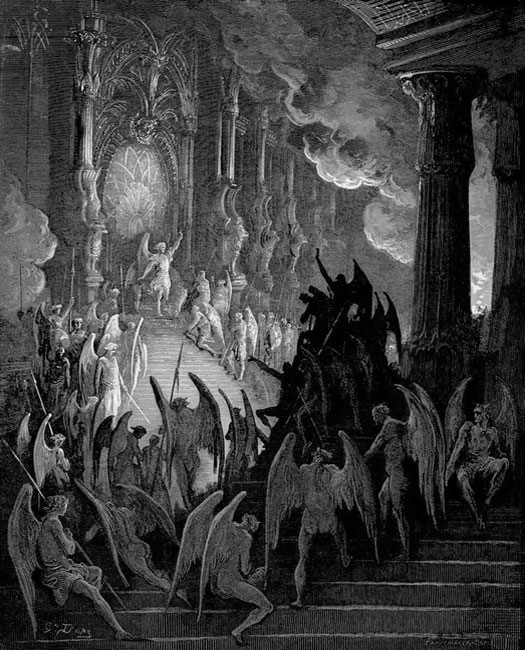
The gospel as a whole is extremely epic in nature, lacking only in length. Reading through this book, I could not help but compare it to Paradise Lost by John Milton. It certainly has an epic feel to it, especially in the section detailing the harrowing of Hell by a pre-resurrected Jesus. The court story and the crucifixion account seem very official in nature, but the rest of the work lends itself to an epic story. This style balances out the work as whole. It almost, in a sense, provides facts that are bolstered by heroic tales. 

Reading through the Gospel of Nicodemus was very interesting. It is by far my favorite gospel account as of yet. Perhaps this is due to my unfamiliarity with the work, but I can’t help but think it would be my favorite even if it was canonized. My primary enjoyment came from the section of the gospel devoted to Jesus’ harrowing of hell, or his triumphant descent into Hell to bring salvation to all  the righteous who have died to date, as Wikipedia puts it. This portion of the gospel raises more questions than I can't even begin to tell you about. However, I suppose it all boils down to one: How influential is the Gospel of Nicodemus’ account of the harrowing of Hell? 

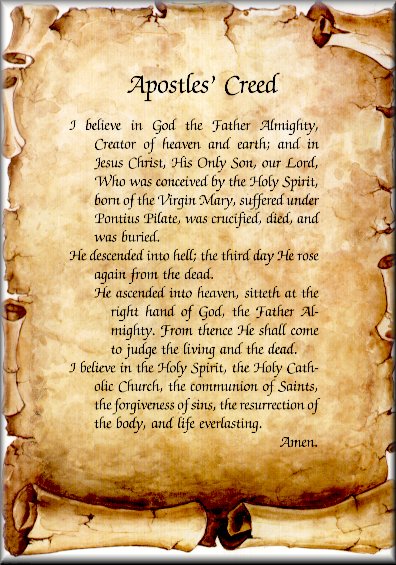
None of the synoptic gospels mention Christ’s descent into the bowels of the Earth. In fact, his descent is only briefly mentioned a few times throughout scripture as whole. However, the idea that Christ descended into Hell, or at least purgatory or “limbo”, is a rather fundamental idea in Christianity. Even the Apostles’ Creed, an early statement of faith in the Christian church, mentions Christ descending into Hell. While the New Testament does not go into very much detail concerning this descent, the Apostles’ Creed, including the acknowledgement of Christ going to Hell, is still used by many denominations of the Christian faith today. While the Gospel of Nicodemus is not present in any of the bibles found today, the idea of Christ’s descent into Hell is very prominent. 

The account of the descent found in the Gospel of Nicodemus is extremely detailed in nature. I wondered if it could have been the original account of Christ’s descent into Hell, upon which New Testament writers based their statements. However, the reverse appears to hold more water, so to speak. The oldest manuscripts depicting the Gospel of Nicodemus do not contain the section covering the harrowing of Hell. Instead, it seems to have been added at a considerably later date. This leads me to believe it is someone’s personal imagination of the way Christ’s descent into the underworld could have gone. 

The first half of the Gospel of Nicodemus is extremely dated and, for the most part, very orthodox. Nearly nothing can be found in the accounts of the trial and passion of Jesus Christ that can be considered as opposing to accounts found in the New Testament. Since the harrowing of Hell was not added until much later, it seems to be more of a commentary compounding on the ideas found in the New Testament. There is no doubt the author of this addition to the Gospel of Nicodemus would have been familiar with the works of the New Testament, too many similarities appear throughout the work to assume otherwise. 


So, in retrospect, it seems that the account of Jesus’ descent into Hell that appears in the Gospel of Nicodemus is not exactly foundational, as I first expected. Instead, the exact opposite appears to be true of the story. While I still believe this work contains much to contribute to the big picture, it seems that New Testament writers only sparked a creative seed for the author. 

Sunday, February 8, 2015

Who is "the Prophet" mention in John 1:19-23?

The questioning of a person’s identity is a common theme throughout the gospels of the New Testament. Therefore, it comes as no surprise to see a group of people questioning John the Baptist about his true identity in the opening chapter of the Gospel of John (John 1:19-23). Apparently, the Jews have suspicions about who John the Baptist is, and they send priests to interrogate him on their behalf. The priests assume John will claim to be the Messiah, “the Prophet”, or Elijah; however, John denies each one of these identities with simple, negative responses. The responses of John the Baptist are not exactly what caught my eye; instead, the questions asked by the priests raised a question of my own. The priests ask John if he is Christ, Elijah, or “the Prophet”. Knowing who Christ and Elijah are, my curiosity was raised by the identity of “the Prophet” mentioned by the priests. 

Many Christians believe the prophet mentioned in this conversation is in reference to the Messiah whose coming Moses foretells in Deuteronomy 18:15. If this is true, Christ and “the Prophet” would be one and the same. After all, Jesus solidifies the idea that he is the prophet Moses is talking about (John 5:46). If this idea is true, John is basically answering the same question twice. The word “Christ” serves more than one purpose in the New Testament. Obviously it can be used in regards to the name of Jesus Christ, the character, but it can also be used as a synonym for “messiah”. Christos, the Greek derivative of the word “Christ” is equated to mashiach, the Hebrew derivative of the word “messiah”. Therefore, the first thing John tells the priests is that he is not the Messiah, so to me, it would not make sense for the priests to ask him again if he is the savior that has been predicted. 

Another theory suggests that “the Prophet” mentioned in this inquiry could be the prophet Jeremiah. It could be that the Jews of that time thought Jeremiah would appear before the Messiah ever came. This is ironic, because the story reveals that John the Baptist is actually the prophet who is preceding the Messiah. However, this theory also seems a bit flawed to me.  Most Jews believe, according to Old Testament prophecy, that Elijah would be the prophet to precede the coming of the Messiah. As such, the priests ask John if he is Elijah, and he tells them he is not. So, it is unlikely they are still questioning if he is the prophet who is to precede the coming of the Messiah. However, this raises even more questions than I started with. If “the Prophet” in question is not the Messiah or Elijah (or even Jeremiah), then who is he?

The only other theory that seems to hold much weight is the theory presented by the Islamic faith. According to Wikipedia, Muhammad is considered in Islam to be a messenger and prophet sent by God to guide humanity to the right way. When looking to the Bible to find evidence of this prophet, many Muslims find the evidence in this passage of John. Some Muslims insist that Muhammad is “the Prophet” while Jesus is the Christ who is mentioned in this line of questioning. However, not all Muslims hold to this belief about this passage. Many believe the three people mentioned by the priests have nothing to do with the prophet Muhammad. 


It is very possible that there is no differentiation between “Christ” and “the Prophet” or between “Elijah” and “the Prophet”. For instance, the priests could have been desperately trying to categorize John the Baptist, just as the tried to categorize Jesus throughout the Gospels, and were frantically reaching for questions through which they could arrive at an answer they liked. They could have been emphasizing the same question with different words in order to persuade John to answer in a different fashion. The endless possibilities only serve to bolster the Bible’s appeal as a book that can be read over and over while eliciting a different response each time. 

Thursday, January 29, 2015

Who was Theophilus?

The Gospel of Luke and the Book of Acts are two of the most popular books in the most popular collection of works of all time. It should come as no surprise they share a few characteristics. Scholars believe both books were written by the man whom they refer to as Luke the Evangelist. More interestingly, in my opinion, is the commonality they share in their purpose. Both books are addressed to a mystery man named Theophilus. This guy has two of the most widely read books of the Bible addressed to him, but who is he?

Since names are so symbolic throughout the entirety of the Bible, it could be beneficial to start with the meaning of Theophilus as a name. The name “Theophilus” literally means “loved by God,” but carries the idea of “friend of God.” Because of this meaning carried by the name, many scholars believe it is just a stand-in for the average believer and could easily placed by any name one may choose. If we are to accept this belief, then our work here is done, and we can go on our way. However, I find it too easy to just assume the name has symbolic meaning when there very well could have been a man named Theophilus who had about 1/4 of the New Testament addressed directly to him. 

Luke starts his books in a literary style widely used by Greeks at the time. The author states his intentions, why he has those intentions, and to whom the intentions are directed. Many people believe the reader can skip over this introduction and the story will still have the same effect. However, if the “most excellent Theophilus” mentioned in Luke 1:3 is a real person, it is probably a good idea to learn as much about him as we can. 

According to Luke, he writes his gospel so Theophilus “may have certainty concerning the things [he] has been taught.” This leads some scholars to believe two things about Theophilus the man. First, scholars believe Theophilus may have been a relatively high-ranking Roman official who was sympathetic of the Christians and their movement. Perhaps Luke wanted to persuade him to believe the gospel and all of its implications. The term “most excellent” was used in that time when addressing someone of a higher social strata and position. Interestingly enough, the same title was used only 3 other times in the New Testament, all in the book of Acts (Acts 23:26, Acts 24:3, Acts 26:25).  In each of these cases, the title is used in respect a Roman governor. To me, it makes sense that Luke would see the need to “convert” someone in a position of power. It would greatly assist the Christian evangelists in their endeavor if they had a man of power helping to spur the cause. Secondly, it is clear Theophilus was not completely new to the beliefs of the Christian faith. Looking closely at Luke 1:4 we can see that Theophilus has previously been taught either by Luke or someone else. Apparently Luke's intent was to provide Theophilus with factual evidence of the Christ he had been taught about. This idea plays especially well into themes found in the Gospel of Luke; the author constantly uses logical examples and mentions eye-witnesses in his work. 


Regardless of the identity (or existence) of a man named Theophilus, we know Luke was aware his books would be read by more than one man. Therefore, copies would need to be made. Another theory on the role of Theophilus in this story suggests he was the man responsible for allowing the book to be published and copied. In doing so, he would have been doing Luke a great favor for which Luke would undoubtedly be appreciative. However, we can only speculate on the identity of the man named Theophilus. Perhaps light will soon be shed on the matter, and perhaps we’ll never know. 

Monday, January 26, 2015

How does Jesus relate the other Rabbis of his time?

The primary role of Jesus throughout the New Testament is that of the Messiah. Prophets speak about the coming of a Messiah throughout the Old Testament, and the gospel writers (in this case, Mark) set out to convince the people Jesus is the one they have been waiting for. Jesus is obviously depicted as special in scripture. He is set apart as a divine being, the son of Yahweh. However, Jesus is given another title throughout the gospel of Mark, both by his followers and passers-by. There are several cases in this book when Jesus is addressed as “Rabbi”. This provoked my interest. Knowing there were hundreds of rabbis in Jesus’ time, I am curious to know how he related to them, and how is relationship with his students (disciples) compared to theirs. 


This presents a problem. Many modern Christians view Jesus’ knowledge as God-given and divine. In fact, Galilee, where Jesus is from, is often given a bad reputation. People consider Galilee to be the home of lower-class, unlearned peasants, not the home of respectable Rabbis. However, upon further investigation, this proves to be fundamentally false. “The level of learning and education in Galilee exceeded that of Judea in Jesus’ day. Galilee surpassed even Judea in its schools of learning, and most of the famous rabbis of Jesus’ day were from Galilee (Johnanan ben Zakkai, Hanina ben Doda, Abba Yose Holikufri, Zadok, Halaphta, Hananian ben Teradyon.)” So, it is very plausible that Jesus is well-educated and an imminent master of Jewish teachings. 

The theory of Jesus being a learned master of the Jewish scriptures is further bolstered by the beginning of his ministry. Jesus began traveling, with his students in tow, to teach in villages across Galilee and beyond its borders. Jesus would not have been the first teacher to do this. In fact, traveling was the norm for Rabbis at the time. Jesus is called Rabbi, travels like a Rabbi, and has students like a Rabbi. All signs are pointing towards Jesus as a learned master of the scriptures. 


A very large difference appears at this point. Jesus’ students most likely did not graduate from Beth Midrash and obtain permission to become his disciples. This is evident from the fact they were already working as tradesmen. However, Jesus hand picked students from the community who had only completed their primary education. As a result of this revolutionary call to discipleship, they fulfilled their duties as students of Jesus. They learned from his teachings and sought to become like him. In the end, they became teachers themselves began educating their own students. 

While Jesus was similar in many ways to Rabbis of the time, he was exceptional. He added much more than his own interpretation to the scriptures he had learned, and he took on students who did not have the proper credentials. These things undoubtedly flustered the other teachers of the time, and they often challenged his authority and authenticity. 



**************Seriously, watch the video. 

****************************Please. 

Tuesday, January 20, 2015

Why are trees used as symbols in the book of Matthew?

See? Not exactly barren.
I’m going to level with you here. My grasp on geography probably isn’t as strong as it should be. It’s hard for me to imagine the landscape or weather of a place unless I’ve been there. I’m directionally challenged and have no concept of separating one place from the other. To top it all off, geography is my worst subject on Trivia Crack. It’s sad, truly. However, my subpar understanding of geography is directly responsible for my blog question for this week. When I think Palestine, I think desert. No amount of pictures of lush, beautiful, sprawling gardens could possibly change my perception. For me to think of Palestine any differently, I would need to go there, and seeing as how that trip isn’t on my immediate travel itinerary, I am stuck with my perception of Palestine as a barren desert. That being said, the countless references to trees and fruit in the book of Matthew definitely jumped off the page. So, what exactly is the purpose for the use of trees and fruit as symbols in Matthew (or the rest of the Bible for that matter)?

Trees appear in Matthew many times. Matthew 7:17, 12:33, 21:18-22, and 3:10 are just a few instances of their appearance. What makes them so useful as tools for Matthew to reach his target audience? 

From recreation to resources, trees have played a significant role throughout history. The presence of trees has always been instrumental when determining the location of civilization. Depictions of trees appear in tombs and on monuments remaining from ancient Egypt. The markings on monuments definitely denote the importance of trees and their fruit as they pertain to livelihood, and the presence of drawings of trees in the burial places of pharaohs of ancient Egypt also ties spiritual importance to them. 

Trees find root in religious practices dating back to ancient Greece and Egypt. The ancient Greeks regarded trees as the first temples of the gods and sacred groves as their first places of worship, where the powerful forces of nature inspired human image making.  Characters in the old testament also used trees as markers for holy ground and places of worship. Coincidentally, the Christian creation story highlights a tree in the construction of the very foundations of life. Adam and Eve eating the fruit of a tree effectively set life as we know it on its course.  Therefore, the significance of trees in religion cannot be overstated.


In the time and region Matthew’s book covers, trees are not only prevalent, but they are essential to the people who live there. Fig trees are extremely  important for the sustenance provided by their fruit, and the olive tree is a staple in commerce. The characters who appear in the book of Matthew are not only familiar with the trees mentioned by Jesus in Matthew’s gospel, but they actively depend on them. Therefore, it is easy for them to relate trees to other aspects of life. Since Matthew is writing specifically to Jews, it is important that they be able to connect everything Jesus says to the scriptures and prophecies of the old testament. Trees are mentioned many times in prophecies concerning Yahweh’s temple and the covenant with his people. Therefore, Jesus’ use of trees as symbols help to fulfill prophecies that were given in the past. 

The fig tree in particular is used often as a source of food for the characters in the book of Matthew. The fruit is filling, sustainable, reliable, and predictable. Fig trees routinely begin growing fruit at the same time they begin growing leaves. Therefore, when a fig tree shows leaves, fruit should always be present. This fact plays a significant role in a particular story in the book of Matthew. In Matthew 21:18-22, Jesus curses a fig tree when he finds no fruit on its branches. Previously when reading this story, I always found it very fickle of Jesus to curse a tree for not having fruit when he wanted it. However, thanks to the research I’ve done, I now understand his frustration. The fig tree in the story is full of leaves when Jesus approaches it. Because figs look so similar to the leaves (as seen in the picture), he can't tell if their is any fruit at this point, but according to the growth of said tree, it should bear fruit along with those leaves. However, there are no figs to be found. The tree looks normal. There are branches and leaves, but there is no fruit. So, Jesus curses the tree that it may never grow fruit again. He connects this to people. A person may exhibit physical (branches) and intellectual (leaves) growth, but if the person is not exhibiting spiritual (fruit) growth, they are not doing what they are meant to be doing. The Jews to whom Matthew is writing can relate to this symbol because they rely so heavily on the predictability of the fig tree. 


The symbolism of trees and fruit found in Matthew works for all these reasons and more. To put it bluntly, people understand trees and recognize their importance. Honestly, trees carry an oddly spiritual connotation with people. Therefore, it simply makes sense for them to be used as symbols, made the subject of metaphors, and appear in parables. 

Sunday, November 9, 2014

Is Purim still celebrated in Jewish culture, and, if so, what are the cultural implications of it?

The book of Esther details the heroic actions of Mordecai and Esther. By working together, these two characters are able to save the entire Jewish nation from basic genocide at the hands of Haman the Agagite. The plot against the Jews is ultimately foiled in an uprising that left over 75,000 of their enemies dead. The days on which the uprising took place became collectively known as Purim, after Pur (the name the “lots” used by the king to determine the day of the massacre). Esther 9:26-28 details the birth of the holiday: “ Therefore they called these days Purim, after the term Pur. There fore, because of all that was written in this letter, and of what they had faced in this matter, and of what had happened to them, the Jews firmly obligated themselves and their offspring and all who joined them, that without fail they would keep these two days according to what was written and at the time appointed every year, that these days should be remembered and kept throughout every generation, in every clan, province, and city, and that these days of Purim should never fall into disuse among the Jews. nor should the commemoration of these days cease among their descendants.” It is this passage that spurred the question for my blog. Is Purim still celebrated in Jewish culture, and, if so, what are the cultural implications of it?

The passage in Esther that introduces Purim as a holiday takes an adamant stance that the celebratory tradition should be passed down forever. Indeed, the tradition of celebrating Purim is still alive and well in Jewish culture. The holiday is considered to be one of the most festive holidays in the Jewish faith. Partakers in the celebration are expected to party hard. The revelry associated with Purim has caused other cultures to dub the holiday as the Jewish Mardi Gras. The good times to be had on Purim are reminiscent of the celebrations that erupted when the Jews overcame their enemies under the guidance of Mordecai and Esther. Revelers today now enjoy drinking, eating and dressing up in all sorts of costumes to celebrate the holiday. 

Noisemaker used to blot out the name of
Haman during the reading of the Megillah,
and traditional Purim cookies.


Perhaps the most interesting aspects of Purim are not illustrated by the way it is celebrated. Instead, it is the historical parallels to the events that took place on the original days of Purim that are so intriguing. “The Pesach (Passover) seder reminds us that in every generation, there are those who rise up to destroy us, but G-d saves us from their hand. In the time of the Book of Esther, Haman was the one who tried to destroy us.” There have been multiple instances in modern times of a nemesis rising up agains the Jewish people and being defeated that hold special connections to Purim. The first person that comes to mind is obviously Adolf Hitler and the Nazi Party. The party was obviously defeated, but not before it claimed the lives of millions of Jews. In 1946, during the Nuremberg war crime trials, 10 of Hitler’s top associates were hanged in punishment for their war crimes. This bears an obvious correlation with Haman’s 10 sons who were hanged at the hands of Esther and Mordecai. If nothing else, these similarities are most definitely eerie. However, this is by no means the only eerie connection made between the original days of Purim and enemies of the Jewish people in modern times. Joseph Stalin, who planned to deport all Jews from the Soviet Union, suffered a fatal stroke on March 1, 1953, the night after Purim. His plans to deport the Jewish people in the Soviet Union were never carried out as a result of his death. 

Without a doubt, these connections are interesting. But, according to many biblical scholars, an even more recognizable figure celebrated the feast of Purim. When Jesus Christ is present at an unnamed festival in John 5, many biblical scholars believe he was in town for Purim.  It is the only holiday that scholars believe could have fallen on the Sabbath during that time period, and the feast at which Jesus was in attendance just so happened to be during the Sabbath day. 


Between the historical connections and the modern revelry, Purim abounds in cultural implications for Jewish people. While it may not be the most important holiday on the Jewish calendar, it is definitely one that is alive and well. According to the Talmud, Purim will be the only Jewish holiday that will continue to be celebrated after the coming of the messiah. 

Sunday, November 2, 2014

Can the arrangement of a classroom have an effect on the classroom experience?


Comfort, both physically and psychologically, helps to promote interaction and critical thinking in the classroom. Of all the different ideas and plans to promote critical thinking, student engagement, and interactive classrooms, no plan covers all of these areas as well as creating a classroom that is physically comfortable for both the students and professors. Several aspects come into play when planning to create an ideal classroom. The learning space needs to be flexible, comfortable, and user friendly for all parties involved. 
Responses from Estrella Mountain Community College regarding traditional classrooms as opposed to learning studios (classrooms that provide more flexibility and comfort. 
Flexibility is vastly important when creating a classroom environment that is beneficial to both the professor and the student. Having a classroom designed so it can be quickly altered presents professors with more options to engage their students. Today’s students expect to be engaged and active in their learning. Passive listening is a learning style of the past. Students today are used to discovering answers on their own and retain information much better that way. By using a flexible style of seating in the classroom it will allow students to move seamlessly from group work, student instruction, or to an arrangement that promotes class-wide discussion. It will also allow students to have their laptops at hand if they can be near a power source and have whiteboards to use as their own in the classroom. All of these things will promote student engagement, which is the key to students performing well and retaining information. And since millennials have also been described as team-oriented people, the ability to work comfortably in groups will help facilitate their learning in a big way. 

Student comfort is a vastly overlooked aspect of the classroom. Students in today’s world thrive on having some sort of control over their classroom experience. Giving students different seating options or control over a personal light source will make them feel more in-control over their time in the classroom. College-aged individuals today are used to personalizing everything. So, giving students the opportunity to personalize the area in which they learn seems like a common-sense approach to the classroom design. All the research being done about this sort of thing seems to point out one key point: today’s students need options and control. If a student, or professor for that matter, is presented with options to carry out in in the classroom, he/she will feel like they have some sort of control over the environment. This will help them learn in a way that they would normally want to learn in. The more option that become available in the classroom, the more control a student can have over his/her learning experience. 


The combination of comfortable and flexible classroom design helps to achieve a learning environment that is user friendly. If the physical components of a classroom can become more flexible, it will open more windows of opportunity to engage students in a  meaningful manner. Likewise, if comfort is achieved alongside the flexibility, students will not feel as if they are trapped in a confined place for an hour. This would mean less time would be spent thinking about what the student is going to eat after class, and more time would be spent learning the material being presented in class. Overall, the three most important components of a classroom being presented in research are comfort, flexibility, and user-friendliness. If this can be accomplished, students will have clearer minds and will be able to think critically and effectively about the material being covered in class. 


*As a bonus, I think one aspect that deserves some attention would be the possibility of sit-to-stand desks. Having desks that allow students to sit or stand provides more flexibility and comfort, and there are definite health benefits that follow along with this option. Here is an article that talks about some of those benefits. Also, one more. 

Monday, October 27, 2014

Biblical allusions found in Douglas Adams' "The Hitchhiker's Guide to the Galaxy"

Douglas Adams' book, The Hitchhiker's Guide to the Galaxy, is the wildly popular first installment of the series carrying the same name. If you have read the book or seen the movie, you probably recognized the dominate theme of a hedonistic view on life. The book's many adventures, sticky situations, wacky characters, and strange places all meld together to form one answer to THE question, "the answer to life, the universe, and everything": 42.... just kidding, a little closer look at the book and the reader can fairly easily come to the realization that Adams is saying there IS no answer to "THE" question. Adams is conveying an obvious hedonistic viewpoint on life; there is no great purpose for us on Earth, so have fun. That being said, it might seem a bit surprising that the book does contain many direct, as well as some not-so direct, allusions to the bible.

The introduction alone carries a few references to the bible, one to the main character, and one to the book itself. Adams sets the time period of his story by writing, "And then, one Thursday, nearly two thousand years after one man had been nailed to a tree for saying how great it would be to be nice to people for a change, a girl sitting on her own in a small cafe in Richmansworth suddenly realized what it was that had been going wrong all this time." This passing statement carries a blatant allusion to Jesus Christ, the main character of the New Testament, who was crucified for claiming to be the son of God and spreading his message of faith and redemption throughout the Middle East. The next allusion that appears in the introduction refers to the bible as a book itself. Adams says his story is on about "a book, a book called The Hitchhiker's Guide to the Galaxy." He then goes on to describe it as a very important, and popular, piece of literature:
"Not only is it a wholly remarkable book, it is also a highly successful one -- more popular than the Celestial Home Care Omnibus, better selling than Fifty-three More things to Do in Zero Gravity, and more controversial than Oolan Colluphid's trilogy of philosophical blockbusters, Where God Went Wrong, Some More of God's Greatest Mistakes, and Who Is This God Person Anyway?"
The guide is supposed to contain everything a person needs to know in order to navigate through life in a successful and meaningful manner. Sound familiar? The hitchhiker's guide is to the people of Douglas Adams' book as the bible is to Christians around the world. Furthermore, I don't think it is a coincidence that Adams juxtaposed the guide with three books questioning the motives and existence of God.

Douglas Adams continuously makes references to religion in general, not limited to Christianity. While presenting his view on life bearing no great meaning, Adams maintains a predominately satirical view on all religious references made in his book. However, there are several noteworthy biblical allusions and symbols to be found throughout the novel. For instance, there is an extended allusion to the Sadducees of the bible found in the book. The Vogons, the antagonists of the book, share many similarities with Sadducees. Douglas Adams describes them:
"They are one of the most unpleasant races in the Galaxy-not actually evil, but bad-tempered, bureaucratic, officious, and callous. They wouldn't even lift a finger to save their own grandmothers from the Ravenous Bugblatter Beast of Traal without orders signed in triplicate, sent in, sent back, queried, lost, found, subjected to public inquiry, lost again, and finally buried in soft peat for three months and recycled as firelighters."
The Vogons are, in essence, the gatekeepers, rulemakers, and rule enforcers of the universe. In much the same way, the Sadducees represent the state, carry out priestly duties, set forth rules for worship and everyday life, and enforce the rules they set in place. Both people groups are sticklers for the rules and are not exactly admired by common people. Coincidentally, both races hold a very high opinion of themselves.

The Vogons are the subject for another allusion found in the book. When they are first introduced, they are described as having a "highly domed nose" and "a small piggy forehead". In fact, pig references appear frequently in regards to Vogons. When Arthur Dent and Ford Prefect, two of the main characters, find themselves stuck on a Vogon ship, Ford offers Arthur advice on how to deal with the Vogons. He tells Arthur to choose his words carefully because Vogons are known for twisting words around and using them to "trample" the individual who first spoke them. This immediately brings to mind the words of Jesus found in Matthew 7:6: "Do not give dogs what is holy, and do not throw your pearls before pigs, lest they trample them underfoot and turn to attack you". The Vogons, in this case, take the role of pigs, and the pearls are any words spoken by another race to the Vogons.

Perhaps the most interestingly utilized biblical allusion found in The Hitchhiker's Guide to the Galaxy comes in the form of a fish, a Babel fish to be exact. The Babel fish obviously borrows its name from the Tower of Babel erected in the Old Testament. The fish plays a key role in the book and is used in relation to languages; however, interestingly enough, it completely reverses the intended purpose of the Tower of Babel. In the story of the tower, the whole Earth spoke the same language; everybody was able to communicate with each other. Because of this, the people were able to erect a tower that very nearly put them face-to-face with Yahweh. God didn't like this very much. So, to keep the people from becoming to powerful, God scattered them all across the planet and confused their languages. Genesis 11:9 states, "That is why it [the tower] was called Babel—because there the Lord confused the language of the whole world. From there the Lord scattered them over the face of the whole earth." However, the Babel fish in The Hitchhiker's Guide to the Galaxy serves an opposing purpose. The fish is inserted into the ear where it unscrambles ANY language, allowing the user to understand everyone and everything he meets. The complete role reversal of this symbolic object is a good example of Adams use of religious themes throughout the book. He constantly turns the tables on the motifs of religion and uses them to support his theme of a meaningless world.

While the book is anything but religious, Adams masterfully uses these themes, as well as many other themes, to bolster the hedonistic nature of the story. Most of the religious references found in the book are ambiguous and satirical in nature. However, as you can now see, there are several allusions directly originating in the biblical text.


**Easter egg allusion from The Hitchhiker's Guide to the Galaxy, the movie**

In the opening credits of the movie, a song is playing. The song is being delivered from the point-of-view of dolphins, who take on the role an all-knowing race (i.e. God). The dolphins, aware of the imminent destruction faced by Earth, have decided to leave their home world and are singing this farewell song to the human inhabitants of the planet. In the song, the dolphins explain to the humans that they have been trying to warn them of what is to come. However, being substantially less intelligent than the dolphins, the humans have missed all the signs and cues. This bears striking resemblance to the later stage of Deuteronomistic history, when God is absent for hundreds of years. The parting words of the dolphins reminisce on the many warnings they delivered and their frustration with the humans for not listening to them or heeding their warnings:


So long and thanks for all the fish
So sad that it should come to this
We tried to warn you all that you're dead

You may not share our intellect

Which might explain your disrespect
For all the natural wonders that
grow around you


In very similar fashion, a large portion of the strife between God and man found in the bible comes as a direct result of man's refusal to listen to God and heed his many warnings about various things. An added layer to this allusion could be the thanks being given by the dolphins for the fish the humans fed them. The Israelites constantly offer animal sacrifices to God in the Old Testament. I'm sure he appreciates that. So long, and thanks for all the oxen, and sheep, and doves, and goats, etc.

Thursday, October 16, 2014

Psalm 57, and some more stuff towards the end..

Psalm 57 

1  Be merciful to me, O God, be merciful to me,

    for in you my soul takes refuge;
in the shadow of your wings I will take refuge,
    till the storms of destruction pass by.


2  I cry out to God Most High,

    to God who fulfills his purpose for me.


3  He will send from heaven and save me;

    he will put to shame him who tramples on me. Selah
God will send out his steadfast love and his faithfulness!


4  My soul is in the midst of lions;

    I lie down amid fiery beasts—
the children of man, whose teeth are spears and arrows,
    whose tongues are sharp swords.


5  Be exalted, O God, above the heavens!

    Let your glory be over all the earth!


6  They set a net for my steps;

    my soul was bowed down.
They dug a pit in my way,
    but they have fallen into it themselves. Selah


7  My heart is steadfast, O God,

    my heart is steadfast!
I will sing and make melody!


   8  Awake, my glory!

Awake, O harp and lyre!
    I will awake the dawn!


9  I will give thanks to you, O Lord, among the peoples;

    I will sing praises to you among the nations.


10  For your steadfast love is great to the heavens,

    your faithfulness to the clouds.


11  Be exalted, O God, above the heavens!

    Let your glory be over all the earth!


David realizes Saul means business
Determining the origin of this particular psalm is no ample task. The story behind the song comes from Saul’s continuous attempts on David’s life. David is no doubt fearful for his own safety as Saul seeks him out. The exact moment of strife noted in this poem happens when Saul wanders into the cave where David is hiding; however, Saul does not realize David is there. David is presented with the perfect opportunity to kill the man who is hell bent on killing him. Instead, David seizes this moment to show mercy to the King in the same way the Lord has continuously shown mercy and offered protection to David. 

1 Samuel 24: “When Saul returned from following the Philistines, he was told, “Behold, David is in the wilderness of Engedi.” 2 Then Saul took three thousand chosen men out of all Israel and went to seek David and his men in front of the Wildgoats' Rocks. 3 And he came to the sheepfolds by the way, where there was a cave, and Saul went in to relieve himself. Now David and his men were sitting in the innermost parts of the cave. 4 And the men of David said to him, “Here is the day of which theLord said to you, ‘Behold, I will give your enemy into your hand, and you shall do to him as it shall seem good to you.’” Then David arose and stealthily cut off a corner of Saul's robe. 5 And afterwardDavid's heart struck him, because he had cut off a corner of Saul's robe. 6 He said to his men, “TheLord forbid that I should do this thing to my lord, the Lord's anointed, to put out my hand against him, seeing he is the Lord's anointed.” 7 So David persuaded his men with these words and did not permit them to attack Saul. And Saul rose up and left the cave and went on his way.
8 Afterward David also arose and went out of the cave, and called after Saul, “My lord the king!” And when Saul looked behind him, David bowed with his face to the earth and paid homage. 9 And David said to Saul, “Why do you listen to the words of men who say, ‘Behold, David seeks your harm’? 10 Behold, this day your eyes have seen how the Lord gave you today into my hand in the cave. And some told me to kill you, but I spared you. I said, ‘I will not put out my hand against my lord, for he is the Lord's anointed.’ 11 See, my father, see the corner of your robe in my hand. For by the fact that I cut off the corner of your robe and did not kill you, you may know and see that there is no wrong or treason in my hands. I have not sinned against you, though you hunt my life to take it. 12 May the Lordjudge between me and you, may the Lord avenge me against you, but my hand shall not be against you. 13 As the proverb of the ancients says, ‘Out of the wicked comes wickedness.’ But my hand shall not be against you. 14 After whom has the king of Israel come out? After whom do you pursue? After a dead dog! After a flea! 15 May the Lord therefore be judge and give sentence between me and you, and see to it and plead my cause and deliver me from your hand.”

Throughout 1 Samuel, readers see David constantly fleeing in order to keep his life. Saul seeks him out relentlessly because he feels that David is a threat to his throne. With Joshua, Saul’s son, helping him, Davide is able to narrowly escape death on several different occasions. 
David gives Yahweh the puppy dog eyes
Psalm 57 shows the wide ranges of emotions and thoughts David is experiencing at this point in his life. This lament poem begins with David pleading with God to be merciful towards him; seemingly, this would be something that many people would do if their lives were immediately threatened. In verses 1-3 David expresses his feeling that the merciful hand of Yahweh is the only thing that will deliver him from Saul. This particular passage is separated by the anacrusis, “selah.” while there are many interpretations of what purpose this anacrusis holds, many scholars believe it was a sign that the audience, reader, or whoever is experiencing the psalm, should stop to reflect. David proceeds to explain his problem to the Lord in verses 4-6. He is in need of serious help, and he knows that Yahweh alone can provide that help. However, at the end of verse 6,  there is a sudden swing in mood in progression: “They set a net for my steps; my soul was bowed down. They dug a pit in my way, but they have fallen into it themselves” (emphasis is my own). This verse shows that David’s supplication to Yahweh has paid off, and it ends with the same anacrusis, “selah.” The remainder of the poem goes on to describe David’s praise to the Lord for delivering from the evil he seemed so destined to encounter. 
David wins
This psalm is alive with literary elements to help it achieve the desired effect of the poet. The psalm itself follows the basic order of a lament poem: invocation and supplication (verses 1-3), lamentation (verses 4-6), confession of faith (verse 7), and praise (verses 8-11). Interestingly enough, the shift in mood comes in verse 6, near the exact middle of the poem. 

Verses 1-3: The poem begins with exact parallelism to help show the drastic implications concerning the event being described. Parallelism is used to describe God’s mercy in line 1, and in lines 2-3 it is used again to detail the refuge the Lord has to offer. Imagery comes into the picture (hilarious, right? so punny) to help illustrate the safety to be found in Yahweh’s “wings”: “in the shadow of your wings I will take refuge, till the storms of destruction pass by.”

Verses 4-6: The imagery found in verse 1 pales in comparison to that found in this segment. The poet allots animalistic characteristics to those who are pursuing David, describing them as “lions” and “fiery beasts” who have “spears and arrows” for teeth and “sharp swords” for tongues. This is followed up with more synonymous parallelism that places Yahweh in a position of power: “Be exalted, O God, above the heavens! Let your glory be over all the earth!”. The climax of the poem to this point is marked by the reversal of roles that have seemingly been assigned so far. David becomes the animal who is in danger of falling into the net or pit that have been presented to him by his pursuers. However, David’s enemies are the ones who fall victim to their trap, thus furthering the animalistic qualities already ascribed to them. 

Verse 7: David faith has been strengthened due to the deliverance he experienced at the hand of Yahweh. Parallelism is used in an immensely important way. Verse 7, “My heart is steadfast, O God, my heart is steadfast!”, very closely echoes verse 1, “Be merciful to me, O God, be merciful to me”. The similarity of these two verses highlight the fact David’s supplication was answered. This verse brings the psalm full circle.

Verses 8-11: Since the psalm has come full circle, there are not many new directions for the poet to take while remaining on the same idea. So, in a sense, it starts over. However, instead of an outpouring of fearful emotion, pure happiness and thankfulness is decanted before the Lord. Parallelism (yes, again) and anaphora are used excellently
to accentuate the joy of David. Verse 8 contains imagery in two parallel lines: “Awake, my glory! Awake, O harp and lyre!”. After commanding his own soul to rouse, David expresses his intention to awake more things on the Lord’s behalf by saying, “I will awake the dawn! I will give thanks to you, O Lord, among the nations; I will sing praises to you among the nations.” The last two verses once again use parallelism to drive home their respective points. The idea of wakefulness found in verse 8 should have its own explication, in my opinion. David describes a process, or a cycle, that his spirit goes through in regards to this psalm and the story behind it. First, his soul is awakened: "Awake, my glory [soul]!" Then, he rouses his praise: "Awake, O harp and lyre!" Lastly, He starts a new season of his life, no longer as fearful of Saul as before: "I will awake the dawn!" This unique passage seems almost meta-theatrical in nature; it is a nested story that colors David's response to the original story from start to finish. 


It is surprising to me the amount of repetition of both ideas and words appear in this psalm. The use of parallelism, along with many other literary devices, translate quite well. It’s almost ironic to think that Hebrew poetry may be the most versatile of all poetic styles (or should I say adaptive), and it just so happens to be the style used in the most scrutinized, analyzed, and marginalized  book in the history of mankind. The Hebrew poetry found in Psalms carries beauty, elegance, and understanding with it wherever it goes. 

Like everything else in the Bible, this specific Psalm has survived (and even thrived) in today's world, and in this case, you don't have to look for an obscure reference to it in a song you've never heard, movie you've never watched, or book you've never read. No, I'm not talking about Pirates of the Caribbean (even though the evidence is totally there), but these words penned (presumably) by David are the driving force behind Mumford & Sons' greatest hits, "Awake My Soul." The Americana/Folk Rock staple band often quotes the Bible, along with other staples of classic literature, so it isn't surprising to find this illusion. The song's chorus continually echoes David's cry for the awakening of his soul found in verse 8 (the English Standard Version uses "glory").